The Practice
From the traditional ceremony to a modern morning ritual - the tools, the technique, and the mindset that transforms green powder into liquid meditation.
What You Need
The soul of the ceremony. A wide, deep bowl allows vigorous whisking. Look for a rough interior surface that creates more foam.
Warm the bowl with hot water before use. Discard the water, wipe dry.
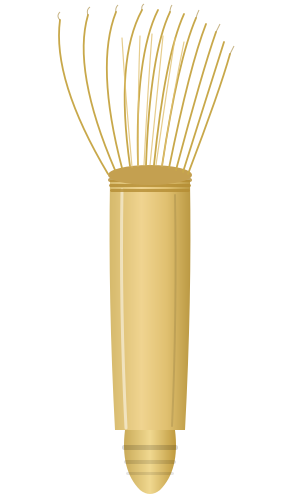
Carved from a single piece of bamboo into 80-120 fine tines. The finer the tines, the silkier the foam. Handle with care - never leave wet.
Soak tines in warm water for 2 minutes before use. Store on a chasen kusenaoshi (holder).
A slender curved bamboo spoon used to measure and transfer matcha. One heaped scoop ≈ 1.5-2g. Avoids compressing the powder.
Never store inside an airtight tin - the bamboo needs to breathe.
Sifting matcha before whisking breaks up clumps, ensuring a completely smooth bowl. Especially important in humid environments.
Use a small mesh sieve (80+ mesh). Sift directly into the chawan.
A small white cloth used to dry the chawan during the ceremony and to clean the rim. Traditional fabric is neatly folded and placed in the bowl.
Rinse thoroughly with no detergent. Air dry - never machine wash.
Traditional iron kettles (kama) or cast-iron tea pots (tetsubin) heat water to the ideal range of 70-80 °C. Iron enriches the taste of the water.
Never let an iron kettle dry out - keep a small amount of water inside when not in use.
The Golden Rule
Boiling water (100°C) destroys catechins and L-theanine - the compounds responsible for matcha's calm focus and umami sweetness. Always cool your water first.
70-75°C: preserves maximum umami and sweetness. Brings out the most complex flavour.
75-80°C: good balance of flavour and extraction. Forgiving for daily preparation.
80-85°C: for lattes where milk temperature blends with the matcha paste.
Quick method: Boil water, let stand 3-4 min, about 80°C. Or pour between two vessels twice, about 75°C.
Traditional Method
Bring water to a boil, then cool to 70-80 °C (never boiling). Boiling water destroys the delicate amino acids and creates bitterness.
Measure 1.5-2g (about 1.5 chashaku scoops) through a fine sieve into your pre-warmed chawan. Sifting prevents lumps.
Pour 60-70ml of 75°C water into the bowl. Start with a small pour to form a paste, then add the rest.
Whisk briskly in a W or M motion - not circular - for 20-30 seconds until a fine, even foam covers the surface. The chasen should not touch the bottom.
Drink within 30 seconds. Rotate the chawan 90° away from you before drinking to honour the front face of the bowl.
Advanced Method
Thick tea (koicha) demands the absolute finest ceremonial grade - premium or culinary will taste harsh and bitter.
Use 3-4g (3-4 scoops) of sifted matcha in your chawan.
Use only 30-40ml of 75°C water. The result should be a thick, opaque paste, not a frothy drink.
Blend slowly with the chasen using a kneading motion. No foam is desired - the texture should be viscous and smooth.
In the tea ceremony, koicha is traditionally shared between guests from one bowl. Wipe the rim between each guest.
Modern Ritual
Master Notes
Boiling destroys L-theanine and produces harsh bitterness. Always cool first.
Even fresh matcha clumps. Sifting takes 10 seconds and dramatically improves texture.
Pour hot water in the chawan, swirl, discard. This prevents the matcha from cooling too quickly.
A W or M motion creates fine foam. Circular whisking often causes uneven froth.
Once opened, keep matcha sealed and refrigerated. Use within 4 weeks for peak flavour.
At least once, drink it pure. You will understand what milk is covering - and what it isn't.
Rinse the chasen under warm water immediately after use. Never use detergent. Dry on a holder.
